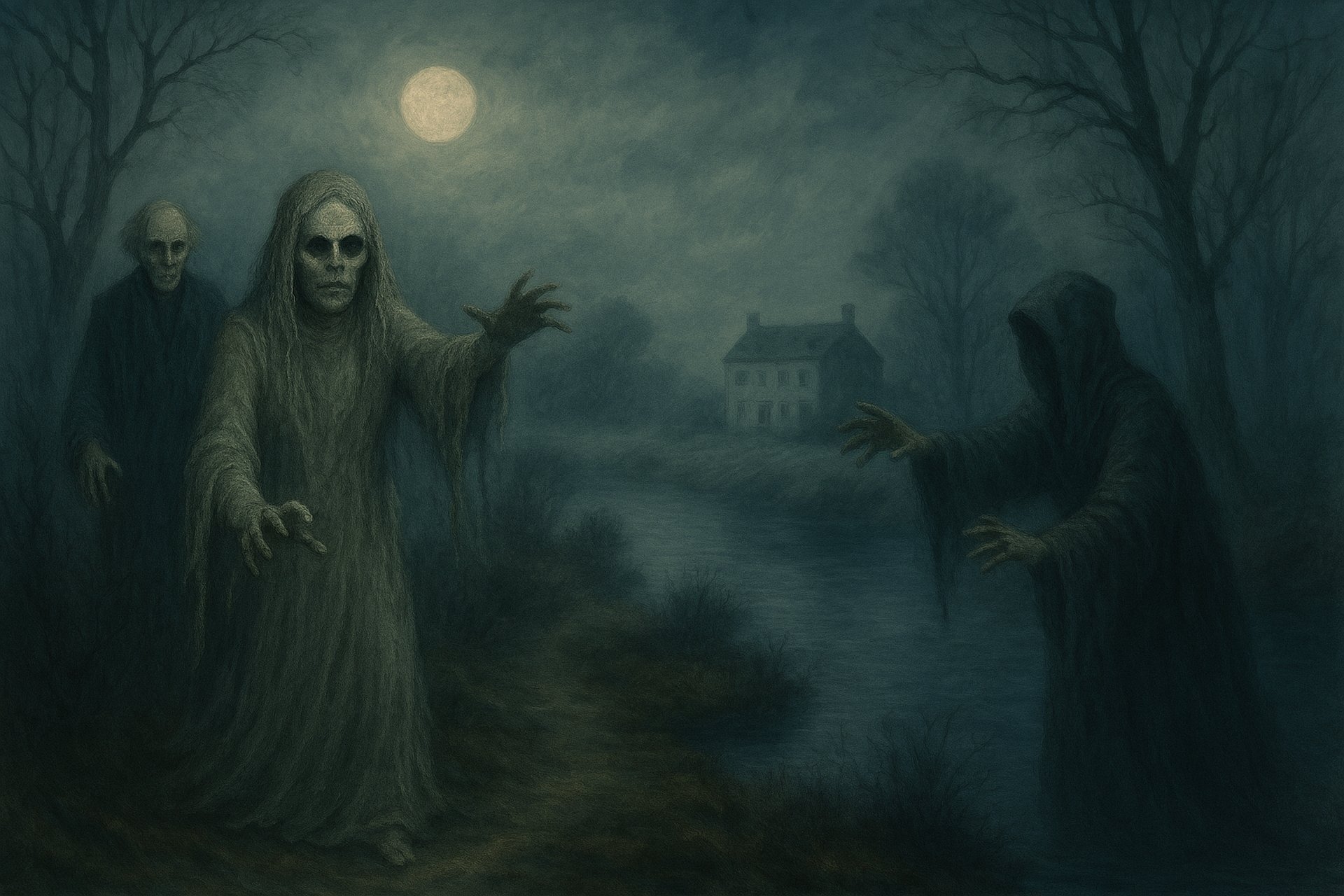
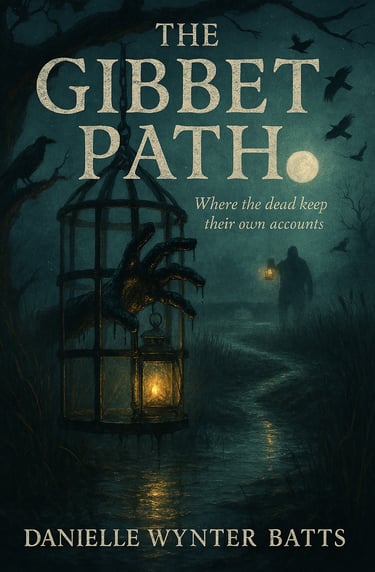
The Gibbet Path is a gothic ghost story on the old Sussex gallows road, where the wind still whispers the names of the condemned and the path remembers every final step. Rooted in local folklore and the darker histories of the Sussex countryside, this tale deepens The Winchelsea Veil series by Danielle Wynter Batts—stories of hauntings, buried sins, and the spirits that linger where justice once faltered.
The oaks remember.
They had stood long before the road was more than a churned ribbon through the marsh, before the gulls learned to wheel with a careful geometry and before men began to hang other men from their highest limbs. Salt had eaten their bark; wind had carved their limbs into the shape of accusation. From those limbs the Crown hung its lessons: iron cages that clinked and clacked like a ledger being balanced. The sound lived in the marrow of the land, a small, metallic heartbeat that rose with every tide and settled with every fog.
On nights when the sea‑fret rolled in low and the moon was a pale coin behind cloud, the path between Rye and Winchelsea Strand became a gallery of warnings. Inside the gibbets, the “ripe” remains of Owlers swung and sang. Tar had sealed some faces into permanent screams; iron had made others into slow, rusting sermons. Villagers crossed themselves at the sight. Children were taught to hurry past and never to look up. The crows learned to feed where the law had fed, and in their feathers the smell of old oil and old blood became a language.
They called him Black Jack Ketch in the taverns, a name spat with equal parts fear and relish. He had been a man who met a Revenue officer with a flail and a laugh; when the law caught him, it answered with a cruelty meant to be exemplary. They boiled him in tar, then locked him in iron to swing above the road. The tar preserved the moment of his death like a pressed flower—black, glossy, and forever open. The tar kept a heat that was not of this world, a slow fever that made the iron hum. People said the cage did not rot because the tar would not let it; others said the tar kept something awake.
Sir Thomas Vane kept a different kind of ledger. By day he wore the magistrate’s coat and the magistrate’s smile; by night he walked the gibbets with a lamp and a small book. He told himself he was reclaiming the Crown’s due when he pried coins from dead mouths and teeth from tarred jaws. He called it a Midnight Tally and kept the entries neat. The dead, he believed, were silent banks. The marsh, which keeps its own accounts, had a different opinion. On a moonless night when the wind came in hard from the sea, Vane reached up beneath Black Jack’s cage and found that the dead could still close a hand. The tarred fingers were hot as coals. The iron sang a new note. Locks softened as if warmed from within; chains uncoiled with a wet, metallic sigh. The gibbets fell like rotten fruit, and from each one stepped not pale ghosts but things of rust and tar and wet bone—men whose movements were the jerking echoes of the chains that had held them.
The Gibbet Path
Danielle Wynter Batts
Danielle Wynter Batts writes atmospheric Gothic and ghostly fiction set along the windswept coasts of England, blending mystery, romance, and the supernatural. Inspired by the rugged beauty of the south coast — where she lives — her stories explore history, myth, legend, and the thin veil between the living and the dead.