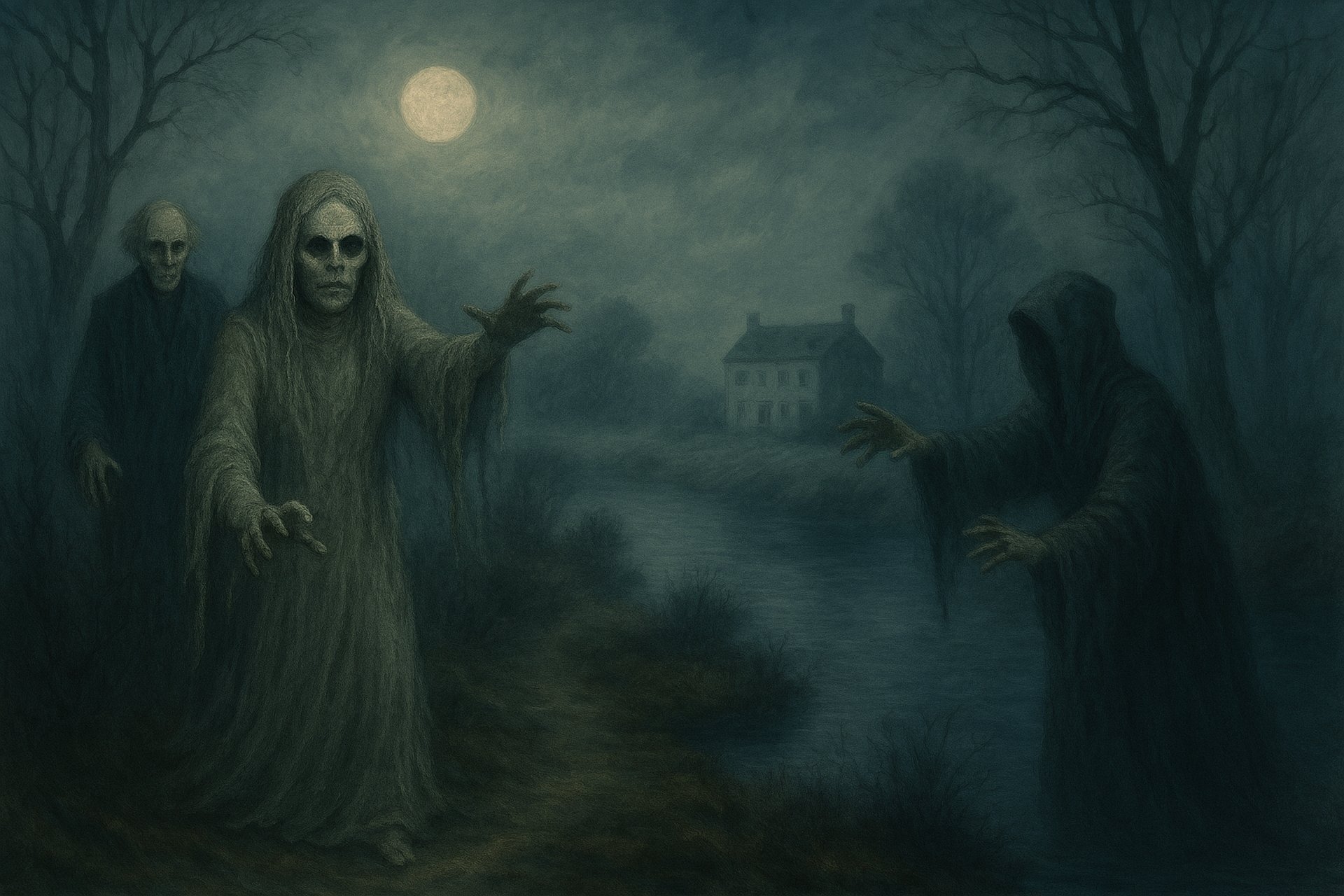
Along the coast of Sussex, where marsh swallows light and fog moves like a living thing, the tide has always carried more than foam and wreckage. It carries memory. It carries bone. It carries the slow arithmetic of the dead. There are nights when the wind turns inland and the air thickens with rot. Windows sweat. Hinges rust overnight. Dogs refuse to cross certain thresholds. The earth softens beneath familiar paths, as though something beneath it shifts in its sleep.
The townsfolk say it is the marsh breathing. They are mistaken.
Beneath Winchelsea lie vaults carved from chalk and silence. Arched chambers that curve like ribs. Passages where salt blooms white upon stone like a spreading infection. In those depths, the air is cold enough to burn the lungs, and water gathers without rain.
The walls remember hands. They remember fingernails splitting against mortar. They remember the sound of brick laid carefully, deliberately, sealing flesh away from light. In darkness, the body does not decay as it should. Not where salt is thick. Not where tide seeps through stone in patient pulses. There are pockets beneath the earth where a heart may stop—but something else begins.
A breath that is not air. A pulse that is not life. There are men who believe stone is final, who believe that if they bury a voice deep enough, it will quiet. That if they wall in the wounded and turn their backs, the sea will not notice.
But the sea tastes everything. It tastes iron as keenly as it tastes brine. It tastes fear. It tastes betrayal. Every drop spilled upon cellar floors sinks downward, threading through chalk and root until it reaches the black reservoir beneath the marsh. There it lingers. There it gathers. There it waits.
Salt preserves. Salt hardens. Salt keeps. Here are chambers under the town where the water does not move as water should. Where it hangs thick and lightless, pressing against stone with the weight of centuries. In that suffocating dark, shapes sometimes drift just beyond sight—tattered cloth swaying without current, fingers extended as though searching for purchase.
Searching for brick. Searching for breath. On certain mornings, fishermen wake with the taste of salt already in their mouths, though they have not yet gone to sea. On certain evenings, a scraping can be heard beneath the floorboards of houses built too near the old tunnels.
Steady. Measured. Unhurried. The sound of patience wearing at stone. For there are debts that cannot be paid in coin.
There are crimes that cannot be absolved by prayer. There are betrayals that do not rot, no matter how long they are buried. They crystallise. They sharpen. They wait for the tide to rise high enough. And when it does—It does not knock. It floods. And what was bricked away returns, not as man, but as reckoning.
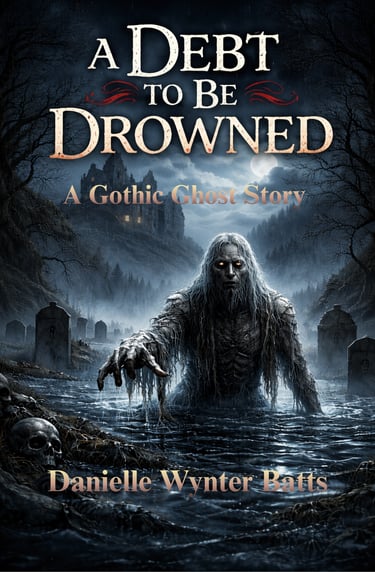
A Debt to be Drowned
Danielle Wynter Batts
Danielle Wynter Batts writes atmospheric Gothic and ghostly fiction set along the windswept coasts of England, blending mystery, romance, and the supernatural. Inspired by the rugged beauty of the south coast — where she lives — her stories explore history, myth, legend, and the thin veil between the living and the dead.